
A Short Guide to Cyber Threat Intelligence Collection
In the threat intelligence lifecycle, the value of every actionable threat intelligence output — be it a strategic, tactical, or operational report — highly depends on the timeliness, accuracy, and relevancy of collected threat data. Only high value threat intelligence can effectively inform decision making and enable you to set up the right defenses, improve detection, reduce mean time to respond (MTTR), and implement other measures to mitigate cyber risk. The key is knowing how to reduce threat intelligence noise while maximizing the relevance of collected data.
Since threat intelligence collection significantly impacts your ability to adapt to the rapidly evolving threat landscape, it's crucial that you perform collection the right way. Whether you're providing threat intelligence for analysts, threat intelligence for MSSPs, or threat intelligence for small teams, these best practices will help you build more effective intelligence capabilities.
Give More Importance to the Planning Stage
The Traditional Cyber Threat Intelligence Lifecycle
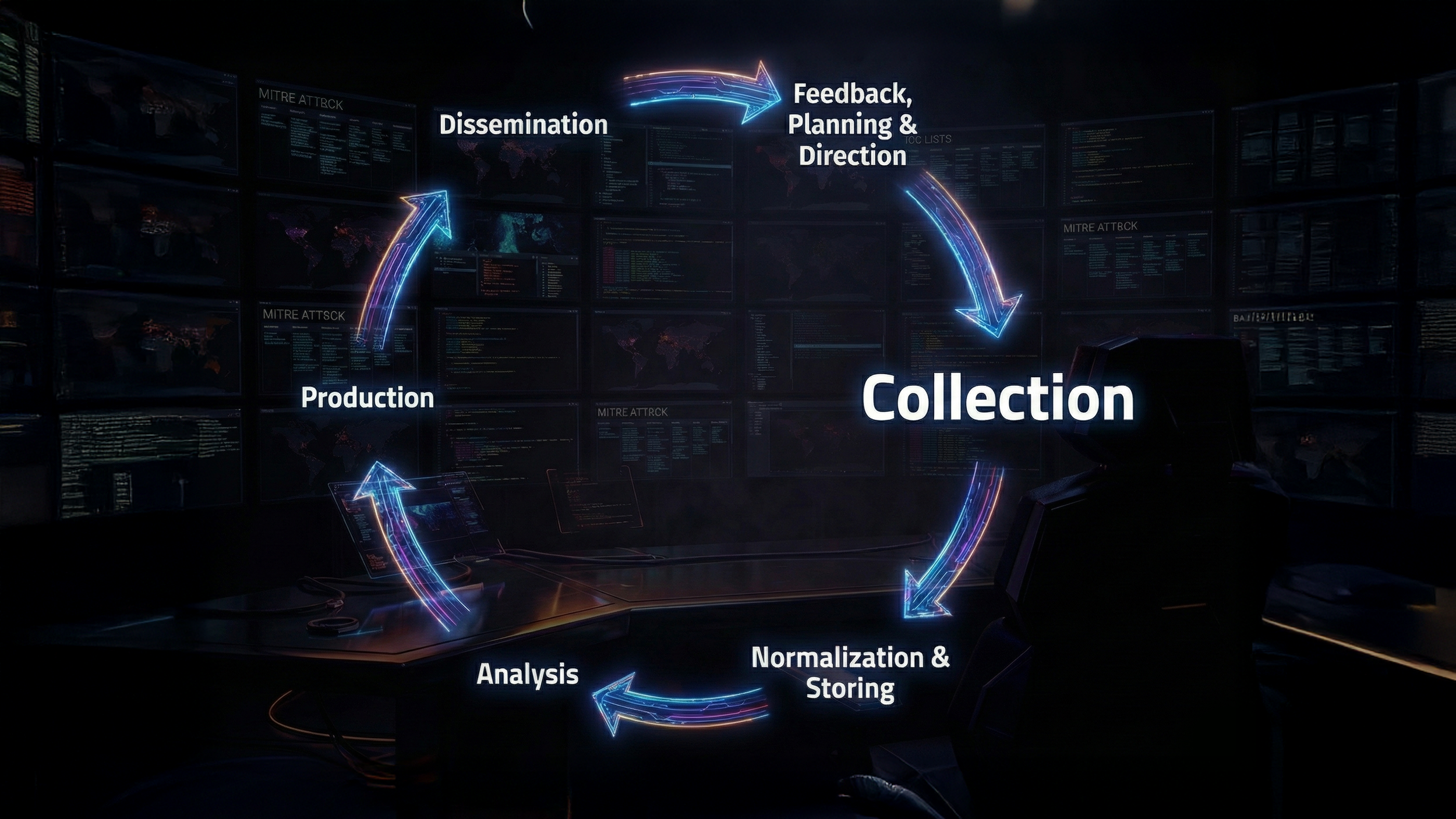
The threat intelligence lifecycle generally consists of 6 stages: planning, collection, processing, analysis, dissemination, and feedback. Each stage sets a foundation for the succeeding stages. Hence, in order for your collection to be effective and to improve threat intelligence feeds, you need to have a solid plan in place that addresses threat feed quality from the outset.
Your threat intelligence requirements can differ from those of other organizations, so you must clearly define objectives and priority intelligence requirements (PIRs) that align with your organization's goals. This planning phase is critical for establishing contextualized threat intelligence that serves your specific security posture.
Who will be the recipients of your intelligence reports? Do you want to be updated of known vulnerabilities? Are you looking to identify threat actor tactics, techniques, and procedures (TTPs)? How about Indicators of Compromise (IoCs)? Late-breaking industry-related security news? Questions like these can help you determine which sources of data you need to focus on and how to align your intelligence collection with your business goals. Proper planning also helps prevent threat intelligence false positives and ensures you're not dealing with stale threat indicators.
Establish a Collection Plan
Based on your objectives and PIRs, draw up a collection plan that emphasizes threat intelligence validation and quality control. Determine the sources, tools, and methods needed to gather the required threat intelligence. In most cases, you'll need to collect data from a selection of Open-Source Intelligence (OSINT), commercial, and internal sources that support threat intelligence enrichment processes.
Liberty91 supports hundreds of sources
OSINT sources typically include threat intelligence blogs, news sites, forums, government advisories, vulnerability databases, social media platforms, and the Dark Web. Commercial sources, on the other hand, refer to security service providers that provide threat intelligence through APIs or feeds to registered subscribers. Some examples include Mandiant, CrowdStrike, VirusTotal, and Group-IB. These commercial feeds often provide enhanced IOC enrichment and behavioral threat intelligence capabilities that complement open-source data.
A well-designed collection plan should also incorporate threat intelligence correlation mechanisms to connect related indicators and campaigns across different sources. This correlation capability is essential for developing comprehensive threat pictures and reducing analytical blind spots.
Match Your Collection Methods with Your Resources
To gather the information you need, you may have to employ a combination of manual and automated methods. The key is selecting approaches that maximize high value threat intelligence while minimizing resource overhead.
Manual methods may include Google dorking as well as monitoring hashtags and specific social media accounts. These approaches can be valuable for discovering emerging threats and understanding threat actor communications, but they require significant human resources and are prone to missing critical intelligence during off-hours.
Automated methods may include the use of web scraping tools, RSS feeds, APIs, and — if you have the financial resources for them — Threat Intelligence Platforms (TIPs). These automated approaches are better suited for processing large volumes of data and can help reduce threat intelligence noise through algorithmic filtering and prioritization.
TIPs are generally complex and expensive, making them more suitable for large enterprises that have the personnel and budget to deploy, manage, and maintain them. While manual methods are less demanding from a financial and administrative standpoint, they are quite tedious and time-consuming to implement. They're also prone to human errors and may struggle with the volume and velocity required for effective threat intelligence validation.
Streamline Threat Intelligence Collection with an AI-Powered Platform
Threat intelligence collection doesn't have to be expensive, complex, or time-consuming. Modern AI-powered platforms can dramatically improve threat intelligence feeds while reducing the operational burden on security teams. You can use Liberty91, an affordable threat intelligence platform that leverages AI to automatically collect highly relevant, up-to-date threat intel data from a wide range of reputable sources.
All you have to do is define who you are, i.e., your company, region, and sector, and Liberty91 will instantly collect the information you need, tailored to your specific organization. This approach ensures you receive contextualized threat intelligence that's directly relevant to your threat landscape and business context, rather than generic feeds that require extensive manual filtering.
Optionally, you may also specify what you want to protect (e.g., assets, suppliers) and what you want to defend against (e.g., threat actors, malware). This will enable Liberty91 to collect even more relevant threat intelligence and provide enhanced threat intelligence correlation across different threat vectors and attack scenarios.
The platform's AI capabilities excel at producing actionable threat intelligence by automatically enriching raw indicators with context, validating freshness to eliminate stale threat indicators, and correlating related threats to provide comprehensive threat pictures. This automated approach significantly reduces threat intelligence false positives while ensuring your team focuses on the most relevant and timely threats.
Whether you're managing threat intelligence for small teams or enterprise-scale operations, Liberty91's AI-driven approach to threat intelligence enrichment and behavioral threat intelligence analysis can help you build more effective security operations without the complexity and cost of traditional TIP solutions.
Want to learn more? Schedule a live demo now to see how AI-powered threat intelligence collection can transform your security operations.