
FullHunt module.
The FullHunt module dynamically scans the external attack surface of your Organizations, essentially "what the hackers see" of your infrastructure. The integration keeps an always up-to-date view of your threat profile, so Liberty91 knows what you host and where, and can flag relevant zero-days against your exposed Assets the moment they surface in your sources. You need a FullHunt Enterprise licence, or you can add FullHunt as a fully managed service through Liberty91.
You need a FullHunt Enterprise licence and access to the FullHunt portal to retrieve your API key and organization IDs.
FullHunt is one of the most popular Managed Integrations available. Liberty91 can run it fully for you as a licence add-on, so you do not have to manage the scanning yourself. Contact us if you would rather have it set up and maintained for you.
What the FullHunt module does
When a new zero-day is being discussed in any of your sources, you are notified immediately, complete with an assessment of the threat, where your exposed Assets are hosted, and what you should probably do about it. The integration creates a Threat Assessment for each imported Asset, covering the latest relevant vulnerabilities, exploits, and breaches. Your Morning Reports also gain a dedicated chapter on threats to your exposed Assets.
How to connect FullHunt
- In the FullHunt portal, retrieve the Enterprise API key for your account.
- In the FullHunt portal, go to Organizations and open the organization you want to
integrate. The unique organization ID is the long hexadecimal string in the page URL, in
the format
xxxxxxxx-xxxx-xxxx-xxxx-xxxxxxxxxxxx. - In Liberty91, go to Modules and open the FullHunt module. Enter your FullHunt API key, then map each FullHunt organization ID to the corresponding Liberty91 Organization.
- Click Update. Liberty91 pulls the relevant data from FullHunt and enriches your Organizations' Assets.
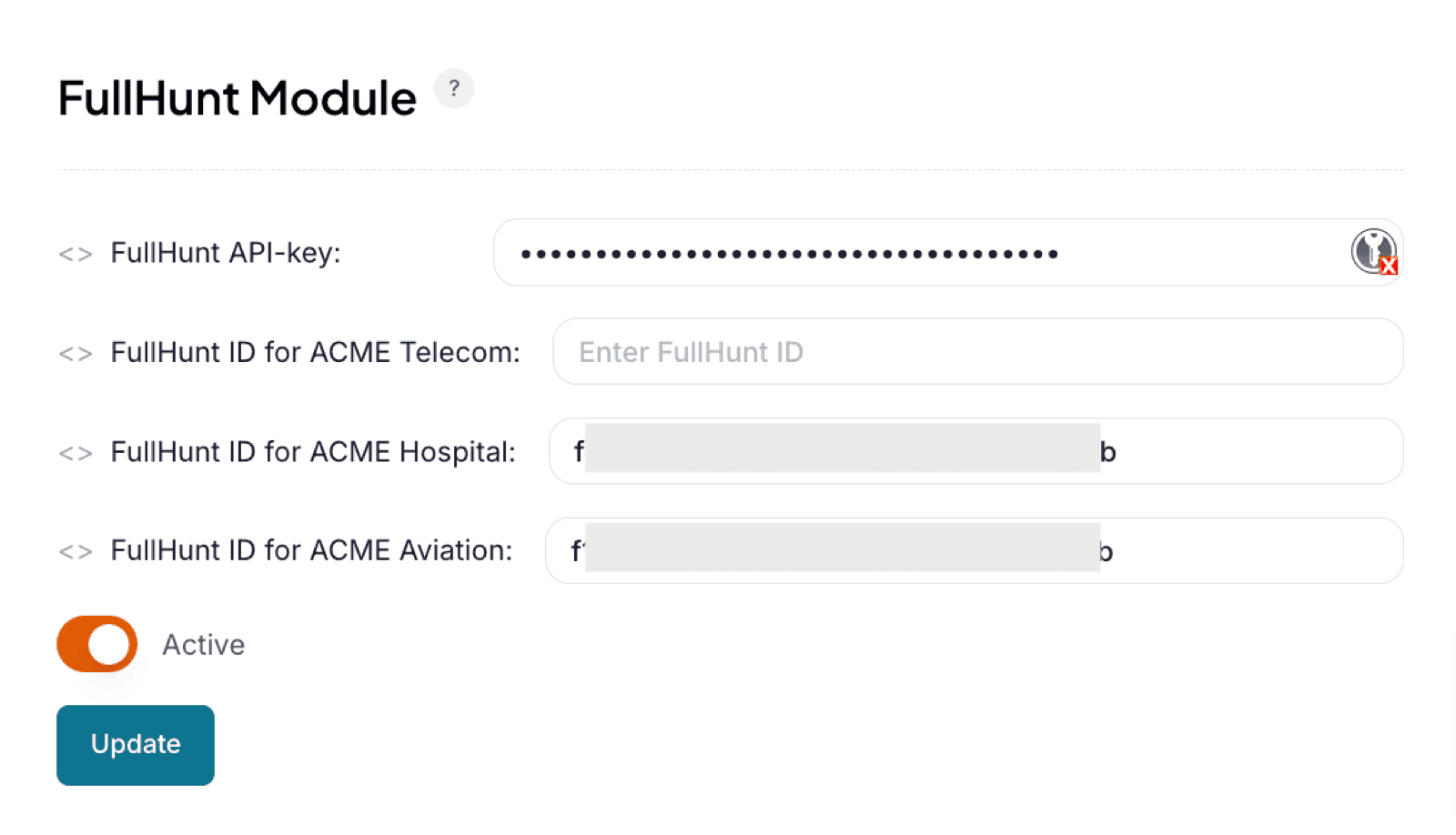
Once the import finishes, Liberty91 maintains a Threat Assessment per Asset and your Morning Reports include the exposed-Assets chapter. If you prefer a static, file-based attack surface import instead, see the HexioSec module.
Frequently asked questions
What do I need to connect FullHunt?
A FullHunt Enterprise licence and access to the FullHunt portal for your API key and organization IDs. Alternatively, Liberty91 can run FullHunt for you as a managed licence add-on.
Where do I find my FullHunt organization ID?
In the FullHunt portal, open the organization under Organizations. The ID is the long hexadecimal string in the page URL.
What changes in my reporting once FullHunt is connected?
Liberty91 maintains a Threat Assessment per imported Asset covering the latest relevant vulnerabilities, exploits, and breaches, and your Morning Reports gain a dedicated chapter on threats to your exposed Assets.